
As America prepares to celebrate its 250th anniversary in 2026, communities across the country are reflecting on the places that helped shape the nation’s story. Along the Delaware River, few places capture that sense of history quite like Fort Delaware and the town of Delaware City.
“No greater love hath no man than this, that a man lays down his life for his friends.” (John 15:3).
We should endeavour to take time to honor all those who have fallen for our safety and freedom.
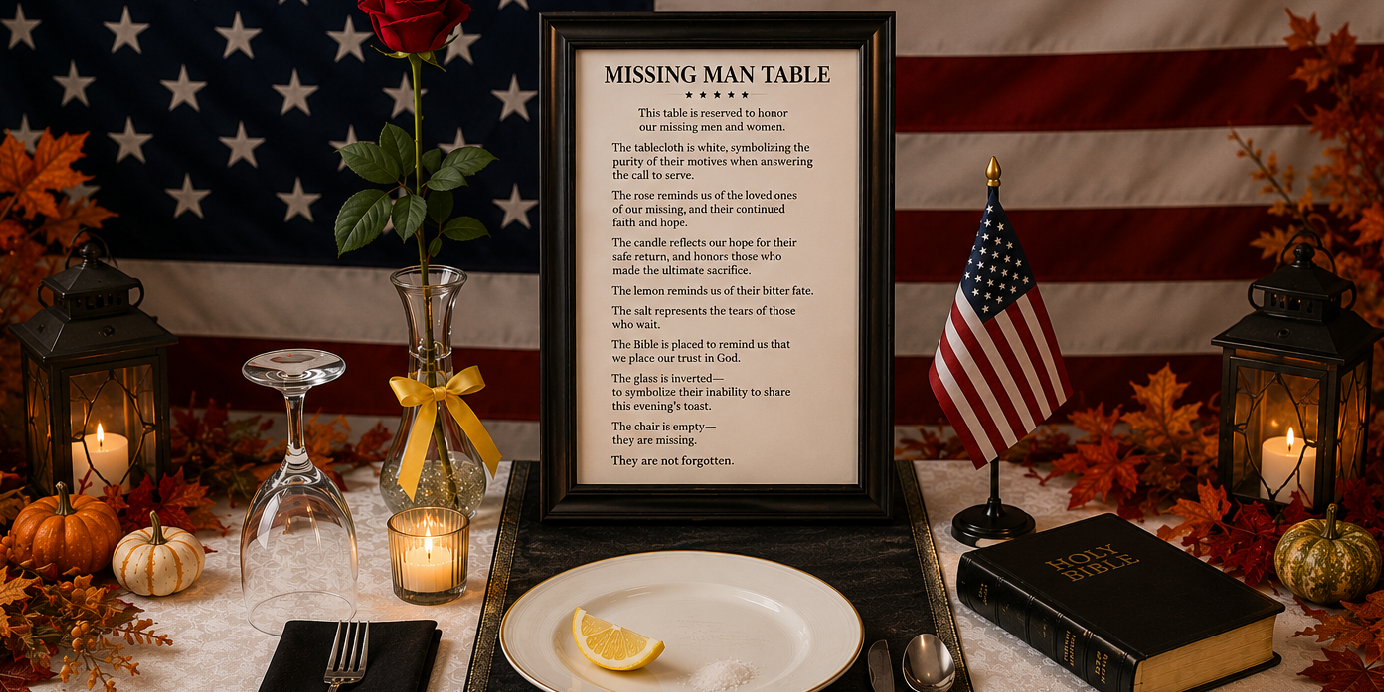
The “Missing Man Table” also known as the “Fallen Comrades Table” is a symbolic table setting to remember the U.S. military personnel who were/are prisoners of war or missing in action. It’s a tradition observed annually on the National POW/MIA Recognition Day celebrated on the 3rd friday in September.
The table is set for one, and each element holds a symbolic meaning representing the POW/MIA’s sacrifice, the hope for their return and the enduring memory of their service.
The Missing Man Table serves as a powerful reminder of the sacrifices made by those who serve in the military and to honor their memory. It provides a moment of reflection and remembrance for all who see it.
Symbolic Elements of the table…
- Round Table – Symbolizes the everlasting concern for those missing.
- Empty Chair – Represents the missing person and their absence
- White Table Cloth – Represents the purity of their intentions in answering the call to serve
- Red Rose – Reminds us of their loved ones and their lives they left behind
- Red Ribbon – Symbolizes the uncertainty of their fate and the hope for their return
- Lemon Slice and Salt – Represents the bitter fate of those captured or missing and the tears of loved ones
- Inverted Wine Glass – Symbolizes their inability to share a toast
- Service Hat – Represents each branch of military service
- Bible – Represents faith (higher power)
- Lighted Candle – Represents hope for their return, alive or dead
Read more articles from VOM Magazine here: https://www.veteransoutreachministries.org/vom-magazine/