

Blog

Designing the American Flag- Veterans Outreach Ministries - Delaware
11 Nov
0

Designing The American Flag – Part 1

Happy Veterans Day! Honor your vets this day by learning about the Designing The American Flag

The current design of the U.S. flag is its 27th; the design of the flag has been modified officially 26 times since 1777. The 48-star flag was in effect for 47 years until the 49-star version became official on July 4, 1959. The 50-star flag was ordered by then president Eisenhower on August 21, 1959, and was adopted in July 1960. It is the longest-used version of the U.S. flag and has been in use for over 63 years.

The First Flag

The first flag resembling the modern stars and stripes was an unofficial flag sometimes called the Grand Union Flag, or “the Continental Colors”.

It consisted of 13 red-and-white stripes, with the Union Jack in the upper left-hand-corner. It first appeared on December 3, 1775, when it flew aboard Captain Esek Hopkin’s flagship Alfred in the Delaware River. It remained the national flag until June 14, 1777. The “Grand Union Flag” has historically been referred to as the first national flag of the United States.

The Continental Navy raised the Colors as the ensign of the fledgling nation in the American War for Independence. The name “Grand Union” was first applied to the Continental Colors by George Henry Preble in his 1872 book known as History of the American Flag.

The flag closely resembles the flag of the British East India Company during earlier in that era. Sir Charles Fawcett argued in 1937 that the company flag inspired the design of the U.S. flag. Benjamin Franklin once gave a speech endorsing the adoption of the company’s flag by the United States.

This was a way of symbolizing American loyalty to the Crown as well as the United States’ aspirations to be self-governing, as was the East India Company. Some colonists also felt that the company could be a powerful ally in the American War of Independence, as they shared similar aims and  grievances  against  the  British government’s tax policies. The resemblance is obvious, and some of the Founding Fathers of the United States were aware of the East India Company’s activities and of their free administration of India under Company rule.

Flag Resolution of 1777…

On  June  14,  1777,  the  Second Continental Congress passed the Flag Resolution which stated: “Resolved,That the flag of the thirteen United States be thirteen stripes, alternate red and white; that the union be thirteen stars, white in a blue field, representing a new constellation.” Flag Day is now observed on June 14 of each year. Both the stripes (barry) and the stars (mullets)  have precedents  in  classical heraldry. Mullets were comparatively rare in early modern heraldry. A widely repeated theory is that the design was inspired by the coat of arms of George Washington’s family, which includes three red stars over two horizontal red bars on a white field. Despite the similar visual elements, there is “little evidence” or “no evidence  whatsoever”  to  support  the claimed connection with the flag design.

The first official U.S. flag flown during battle was on August 3, 1777, at Fort Schuyler during the Siege of Fort Stanwix... Massachusetts reinforcements brought news of the adoption by Congress of the official flag to Fort Schuyler. Soldiers cut up their shirts to make the white stripes; scarlet material to form the red was secured from red flannel petticoats of officers’ wives, while material for the blue union was secured from Capt. Abraham Swartwout’s blue cloth coat. The 1777 resolution was probably meant to define a naval ensign. In the late 18th century, the notion of a national flag did not yet exist or was only nascent. The flag resolution  appears  between other resolutions  from  the  Marine Committee.

The Flag Resolution did not specify any particular arrangement, number of points, nor orientation for the stars and the arrangement or whether the flag had to have seven red stripes and six white ones or vice versa. The appearance was up to the maker of the flag. One  arrangement  features  13  five pointed stars arranged in a circle, with the stars arranged pointing outwards from the circle (as opposed to up), the Betsy Ross flag. Experts have dated the earliest known example of this flag to be 1792 in a painting by John Trumbull.

Despite the 1777 resolution, the early years of American independence featured many  different  flags.  Most  were individually crafted rather than mass produced.  While  there  are  many examples of 13-star arrangements, some of those flags included blue stripes as well as red and white.

Benjamin Franklin and John Adams, in an October 3, 1778, letter to Ferdinand I of the Two Sicilies, described the American flag as consisting of “13 stripes, alternately red, white, and blue, a small square in the upper angle, next to the flagstaff, is a blue field, with 13 white stars, denoting a new Constellation”. John Paul Jones used a variety of 13-star flags on his U.S. Navy ships including the well-documented 1779 flags of the Serapis and the Alliance. They were two of the earliest known flags of 13 stars.

 

Read more articles from VOM Magazine here: https://www.veteransoutreachministries.org/vom-magazine/

Read More
Female Veteran of the Quarter - Constance Sims Rosser - VOM Magazine - Delaware
04 Nov
0

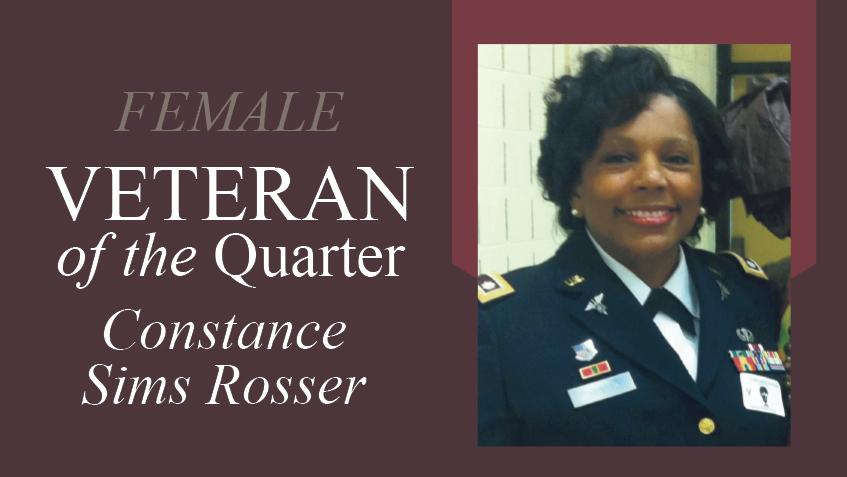
Female Veteran of the Quarter – Constance Sims Rosser

This article features Constance Sims Rosser

Constance Sims Rosser entered the United States Army in 1985. She was assigned to the US Army Medical Service Corps as a Nuclear Medical Science Officer and Preventive Medicine Officer.

She  served  overseas  and  at  various installations within the USA. She is a Command and General Staff College graduate. Her passion in retirement is to help her community; be a voice and advocate for others and focus on her physical, mental, emotional and spiritual wellness.

In addition to having a wonderful husband and two adult children, she is proud of her many accomplishments in the VA National Golden Age Games. In five years she has won four gold medals and two silver medals. Her medals were awarded in power- walking and recumbent bike cycling

Read more articles from VOM Magazine here: https://www.veteransoutreachministries.org/vom-magazine/
Read More
Spirituality - VOM Magazine - Delaware
28 Oct
0

Spirituality

Article written by Dr. Carol C. Fisher, Pastor New Covenant Presbyterian Church, Middletown, DE

“The Christian is an instrument played by the Holy Spirit. The aim of spiritual discipline is to keep this instrument in tune.”

– Thomas Merton When it comes to the topic of spirituality, most of us would agree that our spiritual lives leave something to be desired. We talk about wanting a more meaningful relationship with God, and we dream about things we could do to make that happen, but too often, that’s where it ends; we don’t carry through on our dreams.

A meaningful spiritual life takes work. That’s why we call those things we do to deepen our “spiritual disciplines.” We need to be intentional about making time and space for God in our lives – to create an environment that nurtures this relationship. If we follow Thomas Merton’s Analogy and we are able to see ourselves as instruments played by the Holy Spirit, then we must ask ourselves: Are our instruments in tune? What might we do to allow the Spirit to play us even more beautifully, in ways that truly honor God?

Are we actively striving to encounter God and mold our lives into the likeness of Jesus Christ? Or, have we put our instruments in the corner and allowed dust to collect on them? Is our faith just another component of our lives which competes with so many others and often gets short-changed? If this is the case, then I encourage you to make a commitment to refresh your spiritual life. Use the upcoming summer months to consider some new possibilities and commit yourself to start these disciplines in the fall.

There are many ways that you can do this. You can have a regular individual devotional and prayer time. You can come to one of the Christian Education Classes we offer at church and join your brothers and sisters in Christ as we learn more about God and yourselves, and encourage each other to grow spiritually. You can worship every week, = coming with an open mind and spirit to what God is Saying to you, through me or others leading the service (including the music). We can create Sabbath time in our lives when we do things to renew ourselves. Thomas Merton continues, “Spiritual disciplines are like the tightening of a violin string…what we must do is bring the stings of the delicate instrument, which is our whole being, to the exact pitch which the Holy Spirit desires of us, in order that the Spirit may produce in us the exquisite melody of divine love we were created to sign…”

Friends, is your instrument in tune? Remember, instruments don’t tune themselves. If yours needs a tuning, commit yourself to it, make a plan, and stick to it. And when the going gets tough and you’re tempted to give up, draw on the strength of your church family to encourage and support you. Perhaps you could join with another to hold each other accountable to faithful discipleship. That’s what the Body of Christ is supposed to do for one another. May it be so for you and for me that God might be pleased with us.

Read More
Army Code Talkers - VOM Magazine - Delaware
21 Oct
0

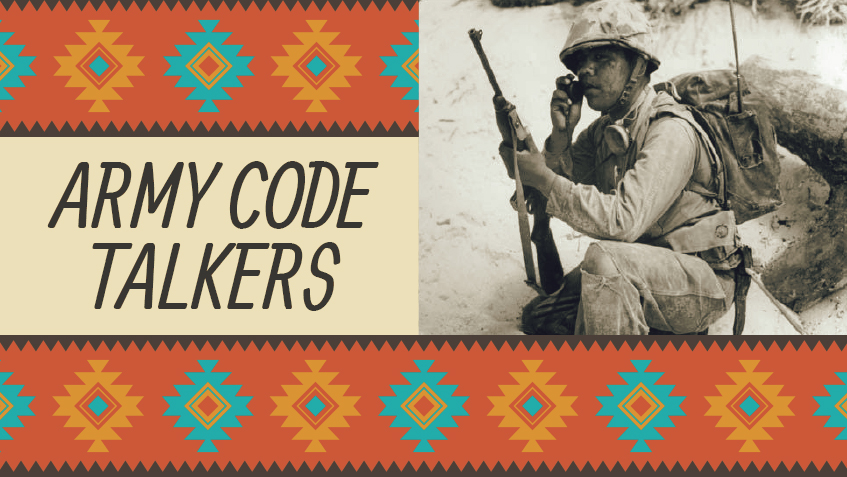
Army Code Talkers

Native Americans in the U.S. Army, Code Talkers, Retrieved, 20 August 2023,http: Army.mil. Pike. David.The Importance of Communications in the Military. Retrieved, (2021), Retrieved 19 August 2023,http:blog.sametec.com. Lincoln Riddle,GuestAuthor, Much More Than Code Talking – The Role of Native Americans in World War

11. Nov 12, 2016. Retrieved 21 August 2023.

Article by Lishamarie Hunter

Army Code Talkers

A Navajo Code Talker relays a message on a field radio. The code talkers served in the South Pacific during World War II and were kept a secret until 1968 when the Navajo code was finally declassified.

Napoleon stated ”The secret of war lies in the communications.”(2016).One of the most important skills needed for success in the military is communication. It  is a huge challenge  faced  by  service  members whether in garrison or during a conflict. Effective command and control have always been the heart of leadership, the 20th century saw the rapid mechanization of all aspects of modern warfare. No longer did soldiers  fight  shoulder  to  shoulder  and commanders could no longer depend being on the battlefield to watch and mange all aspects of the mission. Even though the modernization  improved  movement  and communication and made it  quicker  to accomplish mission. The modernization also made  communications  and  missions vulnerable. The enemy could intercept and decipher  messages.  Because  of  this vulnerability, the military decided during WWI and WWII to use Native American soldiers to communicate secret messages and information to the soldiers on the front lines.

During WWI and WWII the military needed  quick  and  reliable  means  of protecting  messages  and  telegraphic messages from the enemy. Native American tribes had their own languages and dialects that  many  outside  the  tribes  did  not understand, also many of these languages were not written down. These languages made it ideal for communication during the wars. Many Native Americans joined the military at this time.

During  WWI  the  142nd  Infantry Regiment 36th Division had a company of Native Americans who spoke 26 languages. They selected two Native American officers to supervise a communication unit staffed by 18 Choctaw. The team transmitted messages relating to troop movement and tactical plans. Soldiers from other tribes including Comanche, Cherokee, Osage, Cheyenne, and Sioux  also  enlisted  as  communication specialists. Prior to this development the Germans broke every single American code. But the Germans NEVER broke the Indian Code.”  It was during this war these Soldiers become know as code talkers.”

During WWII the Army used Native Americans in the signal operations both in Europe and the Pacific areas of conflict. After basic  training  where  they  learned communication techniques. After the initial training the code talkers developed their own words for the various military terms, that never existed in their native tongues (Le.colonel  “silver  eagle” fighter plane “hummingbird”).

The Army and Marines used a group of 24 Navajo code talkers in the Pacific.  These soldiers and marines fought in some of the most fierce campaigns. In North Africa, eight code talkers from the Iowa Meskwaki tribe with the 168th Infantry Regiment. In Europe 17 Comanche Codes were assigned to the 4th Signal company, 4th Infantry Division. From DDay in 1944 to the liberation of Paris and the Battle of the Bugle these soldiers and marines kept the lines of communication secure. Some of the code talkers gave the ultimate sacrifice and some were wounded and at least one was taken as a POW. Due to the commitment and expertise of these heroes the enemy never cracked the code talkers communications.

Many of the code talkers stayed and served in the military, many serving in Korea and Vietnam.

For  many  years  the code  talkers contributions were kept classified. June 18 2002, Congress passed the Code Talkers Recognition Act to honor the important part the Soldiers played in the highly successful communications operations saving countless lives and QuickRing the end to WWI and WWII.   Congress   recognized   the phenomenal  achievements  of  the  code talkers despite the discrimination waged against them . The act states that “at a time when Indians were discouraged from practicing their native culture, a few brave men used their cultural heritage their language, to help change the course of history:'(2021).

It’s  important to celebrate the professionalism of this courageous group of individuals who helped to influence the outcome of history.

Read more articles from VOM Magazine here: https://www.veteransoutreachministries.org/vom-magazine/

Read More
Financial Focus: Should you downsize before you retire? - Veterans Outreach Ministries - Delaware
14 Oct
0

Financial Focus: Should you downsize after retiring?

This article was written by Edward Jones for us by your local Edward Jones Financial Advisor, Tyler Simonds. Edward Jones, Member SIPC. You can reach Tyler at 410-398-4214

Should you downsize when you retire?

When you retire, you’ll experience many changes – should one of them involve your home?

The issue with downsizing is one that many retirees will consider. If you’re open to a change you could find that moving to a smaller house, a condo ran apartment may make sense for you.

Let’s Consider Some of the Advantages of Downsizing: 

You could save money.

Moving to a smaller space could lower your utility bills and upkeep cost.

You could save effort.

A smaller home will mean less maintenance and cleaning.

You could de-clutter

Over the years, most of us accumulate more possessions than really need. Downsizing gives you a chance to de-clutter. And you can do some good along the way, too, because many charitable organizations will welcome of your items.

You could make money.

If you’ve had your home for many years, it’s certainly possible that it’s worth more — perhaps a great deal more — than what you paid for it. So, when you sell it, you could pocket a lot of money — possibly without being taxed on the gains. Generally, if you’ve lived in your home for at least two years in the five-year period before you sold it, you can exclude $250,000 of capital gains, if you’re single, or $500,000 if you’re married and file taxes jointly. (You’ll want to consult with your tax advisor, though, before selling your home, to ensure you’re eligible for the exclusion, especially if you do own multiple homes. Issues can arise in connection with determining one’s “primary” residence).

But downsizing can also entail some drawbacks. First of all, it’s possible that your home might not be worth as much as you had hoped, which means you won’t clear as much money from the sale as you anticipated. Also, If you still were paying off a mortgage on your bigger home, you may have been deducting the interest payments on your taxes — a deduction that might be reduced or lost to you if you purchase a less-expensive condo or become a renter. Besides these financial factors, there’s the ordinary hassle of packing and moving. And if you’re going to a much smaller living space, you may not have much room for family members who want to visit or occasionally spend the night.

So, as you can see, you’ll need to weigh a variety of financial, practical and emotional issues when deciding whether to downsize. And you will also want to communicate your thoughts to grown children or other family members who may someday have reason to be involved in your living space. In short, it’s a big decision — so give it the attention it deserves.

Read more articles from VOM Magazine here: https://www.veteransoutreachministries.org/vom-magazine/

Read More
Male Veteran of the Quarter - Jamie Sisler Sgt - VOM Magazine - Delaware
07 Oct
0

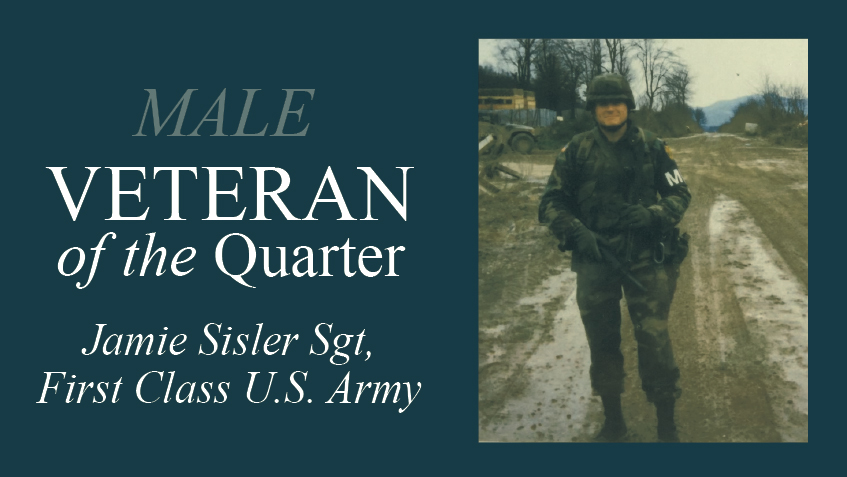
Male Veteran of the Quarter – Jamie Sisler Sgt

This article is features Jamie Sisler Sgt, First Class U. S. Army

Sergeant First Class, (Retired) Jamie Sisler graduated from Plymouth Canton High School in 1989 and began working towards a criminal justice degree. In January 1993, Jamie decided to pursue a dream of his and join the armed forces. He reported to the US Army Military Police (MP) School at Fort McClellan, Alabama for his basic combat and military police training. During basic training Jamie was chosen by his drill sergeants to be the platoon leader and ultimately was chosen as the honor graduate for his platoon.

In May 1993, PV2 Sisler reported to Fort Jackson, South Carolina where he worked as a patrolman providing law and order with the Fort Jackson MP Company. While at Fort Jackson he joined the Special Reaction Team (SRT) and attended training with the Columbia Police Department SWAT team.

In November 1994, SPC Sisler reported to Ansbach, Germany and was assigned to the 2nd Platoon, 615th MP Company. He volunteered to go to Hohenfels, Germany to the Joint Multinational Readiness Center to be a civilian on the battlefield (COB). SPC Sisler assisted units prepare for the upcoming mission to Bosnia Herzegovina in support of Operation Joint Endeavor (OJE).

In December 1995, the 615th MP Company split up and his platoon was temporarily reassigned to the 630th MP Company out of Bamberg, Germany for deployment in support of OJE. In January 1996, the 630th MP Company crossed the Sava River into Bosnia and Herzegovina, enroute to their base in Tuzla. There his company provided law and order operations, set up check points, main supply route patrols, and gate guard duties. During the deployment SPC Sisler was promoted to Corporal and made the leader of his team.

In October 1996, CPL Sisler received orders for Fort Hood, Texas where he was assigned to the 2nd Platoon, 210th MP Company as a team leader. CPL Sisler again joined the SRT for his company and was voted the team leader by his peers, despite being lower ranking. CPL Sisler also attended the Basic Leadership Development Course and upon graduation was promoted to SGT in June 1997.

In January 1998, SGT Sisler left active duty and returned to Michigan where he worked in construction. In October 1999 he joined the army reserve and in 2004 went back on active-duty status working with army reserve units. SSG Sisler was assigned as the training NCO for other 2/100th Military Police Battalion in Inkster, Michigan with the mission of teaching basic military police school, as well as the basic and advanced NCO courses to army reserve and national guard soldiers

In May 2008, SFC Sisler was temporarily assigned to the 11th Military Police Brigade and deployed with them as an operation NCO to Iraq in support of Operation Iraqi Freedom. SFC Sisler was picked to be a member of the personal security detail for the 11th MP Brigade Commander and also worked as a battle NCO in the brigade tactical operations center (TOC).

In 2009, SFC Sisler received orders back to Fort Jackson where he was assigned as the training NCO for the 2/108th MP Battalion. During this time, he played a big part in setting up The Army School System (TASS) Center of Excellence at Fort Knox, KY as a location for all US Army Reserve MP Battalions to host basic and advanced military police training.

In November 2012, he received orders assigning him to the 800th MP Company as the operation NCO in El Dorado, AR. SFC Sisler was among three other personnel responsible for setting up this new combat support MP company.

In August 2013, SFC Sisler received orders assigning him to the 87th Army Reserve Support Command (ARSC) as the operations NCO in Birmingham, AL. In 2015, he transferred to the Gulf Division, 75th Training Command when his previous unit cased it’s colors. In October 2019, SFC Sisler retired from active duty and now resides in Birmingham, AL with Stephanie, his amazing wife of 23 years.

Read more articles from VOM Magazine here: https://www.veteransoutreachministries.org/vom-magazine/
Read More
Back to School Anxiety - VOM Magazine - Delaware
23 Sep
0

Back To School Anxiety By Dee Jones

By: Dee Jones, President of Light 2 World, Inc.

Whether it’s a holiday, new teacher, or new vacuum cleaner, my 6 year old is anxious! School starts early this year, providing a recipe for tight tummies, tears, and tantrums on the first day of class. What can you do? There is help for calming little and big nerves. First, know the signs. Children display anxiety in various ways. I know something is brewing when I see the “nail-biting”. Tearing up more often, hair twisting, lip-picking, or tummy ache. Evengrown-ups display signs of anxiety that are oh too familiar.

The Centers for Disease and Control(CDC) term these emotional signs and symptoms as internalizing disorders. Other disorders in this category are depression, panic attacks, or separation anxiety. Second, treatment should be age appropriate. Toddlers are usually stressed when separated from their parents. I child-care is a must, start gradually with little visits away from your little one. Older children can express extreme fears in new situations and changes in your family. My little one was extremely close to my friend’s pet. A week after this loss, my colleague presented him with a memorial necklace with a picture of the dog. We talk about the good times, shed tears, and write stories about those fun times. With time and prayer, we cry less and laugh more.

Third, make plans and get help when needed. For example, new first graders can visit the new classroom and meet their new teacher before the year begins. If you are moving or a family member leaves, create new memories that are fun. Focus on the positive aspects of times together. Laughter and tears are ok. Whatever the reason for anxiety; seek professional help if your best efforts continue to fail. “Repeated and sudden fear of unknown origin, trouble breathing, insomnia, and persistent headaches and stomach aches are physical signs of anxiety. Get help. Lastly, teaching your little one to pray is one of the best tools you can teach. Prayer can be applied anywhere at any time. If this is new to you, there are numerous resources to get started. Set time in the morning and at night to begin this wonderful discipline. The book of Psalms is full of wonderful prayers. My mom taught me Psalm 23 and it consoles me to this day. Now I teach it to my little one. How comforting to know, “the Lord is my Shepherd.”


Read more articles from VOM Magazine here: https://www.veteransoutreachministries.org/vom-magazine/

Read More
Frozen Strawberry Clusters - VOM Magazine - Delaware
09 Sep
0

Recipe – Frozen Strawberry Clusters

Recipe by WellnessbyKay.com

MAKES: 4 Servings
TOTAL TIME: 45 minutes

INGREDIENTS:

  • 1 Pack of Strawberries
  • 1 Pack Plain Greek yogurt
  • 1 TBSP Honey
  • 1 TBSP Vanilla Extract
  • 1/2 Pack of Chocolate Chips
  • 1 TBSP Coconut Oil

INSTRUCTIONS:

  1. Chop strawberries into small pieces.

  2. Mix the strawberries, plain greek yogurt, honey, and vanilla extract in a large bowl.

  3. Add scoops of the mixture to a parchment paper lined baking sheet to form clusters. Place them in the freezer until they are completely frozen solid.

  4. Once the clusters are frozen, melt the chocolate. Add the chocolate chips and coconut oil to a bowl and microwave for 15-30 seconds intervals stirring each time until melted.

  5. Remove frozen clusters from the freezer and dip each into the melted chocolate to cover thoroughly. Use spoon to place back on sheet.

  6. Place the clusters back into the freezer for a few minutes to let the chocolate coating harden and the yogurt re-solidifies.

Then Enjoy!

Read more articles from VOM Magazine here: https://www.veteransoutreachministries.org/vom-magazine/

Read More
Days to Display the US Flag- VOM Magazine - Delaware
02 Sep
0

Days to Display the Flag (September-November 2023)

Holidays to Display Flag Sept – Nov 2023 Fall Issue

· Labor Day – Sept 4
· Patriot Day and National Day of Service and Remembrance – Sept 11, half staff until sunset
· POW/MIA Recognition Day – Sept 15
· Columbus Day (observed) – Oct 9
· Navy Day – Oct 27
· Signing of WWI Armistice – Nov 11, 1918
· Veterans Day – Nov 11
· Thanksgiving Day – Nov 23 And other days as may be proclaimed by the President of the United States

Non Flag Display Days (for information only)

V-J Day – Sept 2, 1943
· U.S. Navy Sea Cadet Corps Inc – Sept 10, 1962
· Grandparents Day – Sept 10
· “Star Spangled Banner” written by Francis Scott Key – Sept 14, 1814
· Ladies Auxiliary VFW organized -Sept 14, 1914
· U.S. Constitution approved – Sept 17, 1787
· Constitution and Citizenship Day – Sept 17
· U.S. Air Force Established – Sept 18, 1947
· Autumn Begins – September 23
· Gold Star Mothers Day – Sept 24
· Yom Kippur Begins – Sept 24
· VFW Day, VFW Established – Sept 29, 1899
· Afghanistan War Began – Oct 7, 2001
· U.S. Navy Established – Oct 13, 1775
· National Boss Day – Oct 16
· Grenada Campaign Began – Oct 23, 1983
· United Nations Day – Oct 24
· Halloween – Oct 31
· Daylight Savings Begins – Nov 6 (set clocks back)
· Election Day – Nov 7
· U.S. Marines Corps Established – Nov 10, 1775
· Grenada Campaign Ended – Nov 21, 1983

Read more articles from VOM Magazine here: https://www.veteransoutreachministries.org/vom-magazine/

Read More
How to Dispose of the US Flag- VOM Magazine - Delaware
26 Aug
0

VFWs can Dispose of American Flags in our Local Area

Find a Location right near you! Search here: www.usflagstore.com

The process and tradition of properly retiring an American flag requires finding a disposal location in your area. At one of these locations (VFW, American Legion, others), your American flag can be properly retired with the respect and gravity that it is entitled. The retirement of an American flag is a time-honored tradition and one that carries a great significance. Taking your flag to one of these flag disposal locations will ensure that the traditions and ceremony are utilized in the flag’s retirement.

As a revered symbol of the United States of America, the flag demands the highest level of respect; and as such should be disposed of in a respectable manner. Provided below are steps to properly retire your own American flag if you are unable to locate a facility. These steps are in accordance with the United States Flag Code (4 USC Sec 8 Para (k), Amended July 7, 1976).

Cecil County, MD:

  1. VFW Post 6027 Cecil County Memorial
    815 Turkey Point Rd North East, MD 21901
    410-287-7817
  2. VFW Post 8175 Elkton Memorial
    208 W. High St. Elkton, MD, 21921
    410-392-3914
  3. VFW Post 7687 Chesapeake City Memorial
    304 Basil Ave Ches. City, MD, 21915
    410-885-5217

New Castle County, DE:

  1. VFW Post 615 Jacob Ferdinand Speer
    1226 Old Cooches Bridge Rd Newark, DE, 19713
    302-368-2672
  2. VFW Post 838 Colonial
    15 W Market St – PO Box 5 Port Penn, DE, 19731
    302-832-8151
  3. VFW Post 3792 Sgt William Lloyd Nelson
    5695 Summit Bridge Rd Townsend, DE, 19734
    302-378-9619

Find a Location right near you! Search here: www.usflagstore.com/flag_disposal_s/2241.htm

Read more articles from VOM Magazine here: https://www.veteransoutreachministries.org/vom-magazine/
Read More